 kevin clarke
Introduction
Radiation shielding has always been a fundamental component of medical imaging and radiotherapy. For decades, lead-based materials have dominated shielding applications due to their high density and effective attenuation of ionizing radiation. However, the landscape is changing.
Driven by advances in material science, growing environmental awareness, and evolving regulatory expectations, lead-free radiation shielding solutions are rapidly transitioning from niche alternatives to industry standards. This article explores the scientific, clinical, and regulatory forces behind this shift—and why lead-free shielding represents the future of radiation protection.
The Limitations of Traditional Lead-Based Shielding
Despite its effectiveness, lead presents several well-recognized challenges:
- Toxicity: Lead is a hazardous material with well-documented health risks
- Environmental impact: Disposal and recycling of lead-containing products are strictly regulated
- Weight and ergonomics: Lead shielding is heavy, contributing to user fatigue and musculoskeletal strain
- Manufacturing constraints: Handling and processing lead require special safety controls
As healthcare systems prioritize safety—not only for patients, but also for staff and the environment—these limitations are becoming increasingly difficult to justify.
What Defines Lead-Free Radiation Shielding?
Lead-free shielding materials typically rely on high-Z alternative elements and composite structures engineered to provide equivalent or superior attenuation performance.
Common design principles include:
- Use of elements such as tungsten, bismuth, antimony, or tin
- Multi-layer or hybrid composite structures
- Optimization for specific photon energy ranges
- Uniform material distribution for predictable attenuation
Rather than relying on mass alone, lead-free solutions achieve shielding effectiveness through smart material engineering.
Advances in Material Science Driving the Transition
1. Energy-Optimized Attenuation
Modern lead-free materials are designed to target clinically relevant photon energies more efficiently. By tailoring composition and thickness, manufacturers can achieve attenuation profiles comparable to—or better than—traditional lead shielding.
This precision is particularly valuable in:
- Diagnostic imaging
- Interventional procedures
- Radiotherapy room accessories and patient shielding
2. Improved Mechanical and Ergonomic Properties
Lead-free shielding materials are often:
- Lighter in weight
- More flexible or form-fitting
- Easier to integrate into wearable or patient-facing products
Improved ergonomics reduce staff fatigue and improve compliance with shielding protocols—an often overlooked but critical factor in radiation safety.
Regulatory and Environmental Pressures
Global regulatory trends increasingly discourage the use of hazardous substances in medical devices. While lead is still permitted in certain applications, compliance requirements are tightening.
Key drivers include:
- Environmental protection regulations
- Occupational health standards
- Sustainability initiatives within healthcare systems
- Increased scrutiny during procurement and certification
Lead-free solutions align naturally with these long-term regulatory and institutional goals.
Clinical and Operational Benefits
From a clinical operations perspective, lead-free shielding offers several advantages:
- Safer handling and storage
- Simplified disposal and end-of-life management
- Reduced risk during damage or wear
- Improved staff acceptance and consistent usage
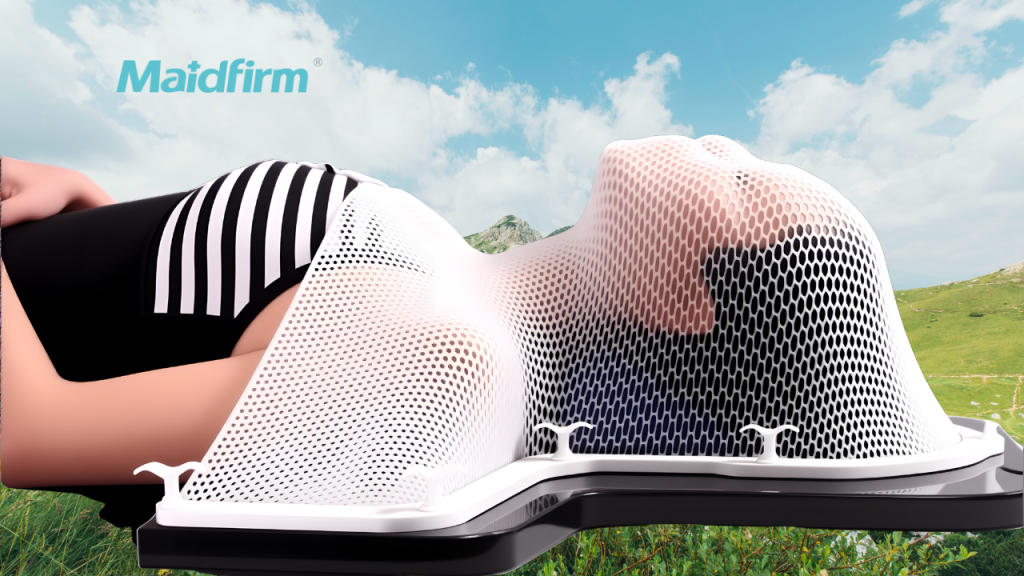
In radiotherapy environments, where shielding components may be integrated into positioning or immobilization systems, these benefits directly support workflow efficiency and safety.
Addressing Performance Concerns
Early lead-free shielding solutions faced skepticism regarding attenuation performance. Today, advances in composite design and quality control have largely addressed these concerns.
Modern lead-free products demonstrate:
- Predictable and validated attenuation characteristics
- Compatibility with clinical QA and acceptance testing
- Consistent performance across production batches
As a result, performance parity with lead is no longer a barrier to adoption.
Manufacturer Responsibility in the Transition
The shift to lead-free shielding is not simply a material substitution—it requires comprehensive engineering, testing, and validation.
Manufacturers must ensure:
- Accurate attenuation characterization
- Long-term durability and stability
- Compliance with international standards
- Transparent documentation for clinical users
Industry leadership is defined not just by innovation, but by responsible implementation.
Looking Ahead: Lead-Free as the New Baseline
As radiotherapy and imaging technologies continue to advance, the supporting infrastructure must evolve accordingly. Lead-free shielding represents a convergence of safety, performance, sustainability, and regulatory foresight.
What was once considered an alternative is increasingly becoming the expectation.
Conclusion
The future of radiation shielding is lead-free. Advances in material science have made it possible to deliver effective attenuation without the health, environmental, and ergonomic drawbacks of traditional lead-based solutions.
As healthcare moves toward safer, more sustainable practices, lead-free shielding is emerging as the industry standard—not by compromise, but by design.
In radiation protection, progress is measured not only in dose reduction, but in responsibility.