
 kevin clarke
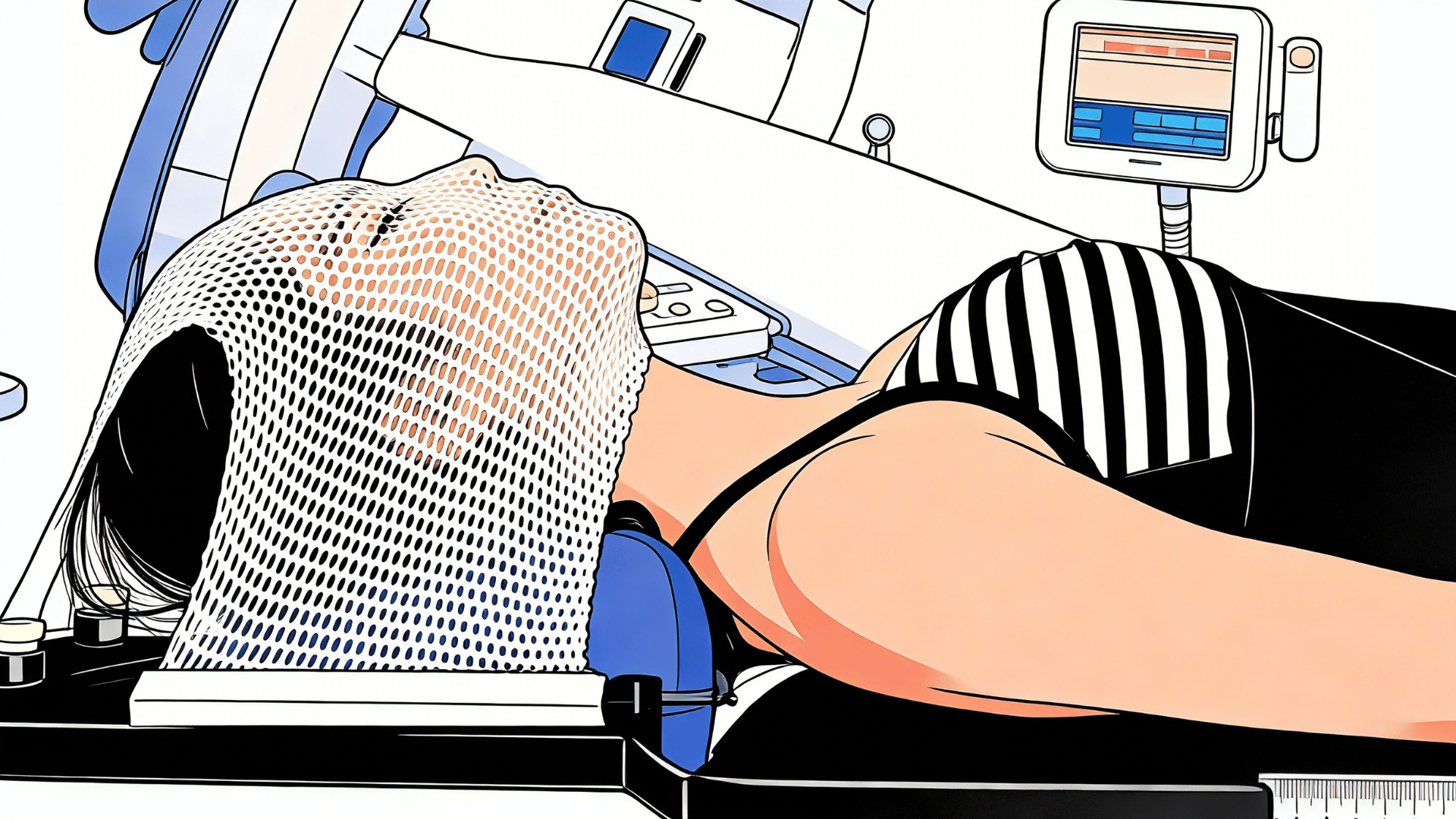
The Hidden Role of Immobilization Materials
Introduction: When Small HU Errors Matter
In modern radiotherapy, treatment accuracy depends not only on beam delivery systems and planning algorithms, but also on the stability of the imaging data used for dose calculation.
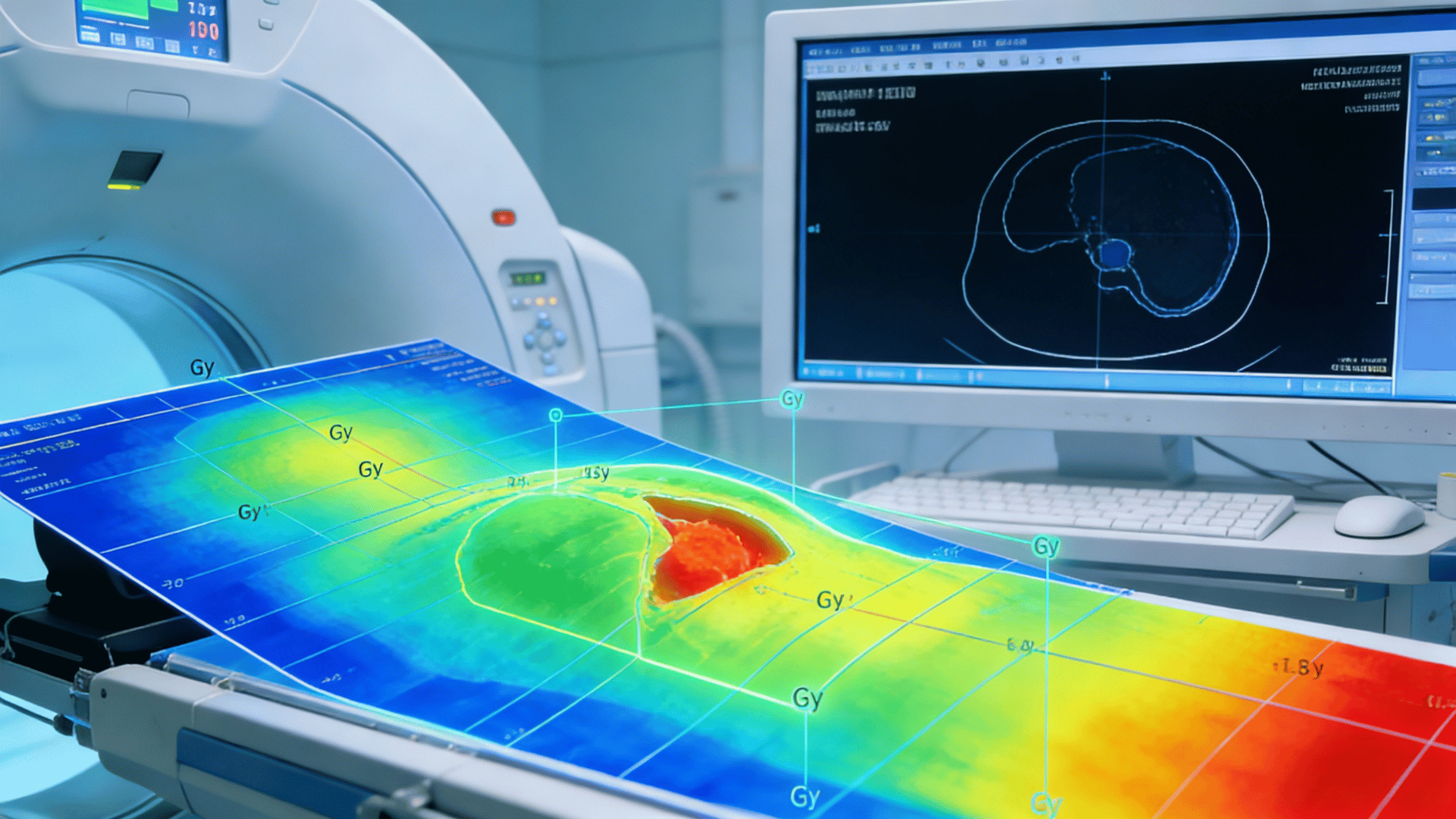
While immobilization devices are often considered “passive” accessories, they actively participate in the imaging chain. If their radiological properties are inconsistent or poorly characterized, even subtle Hounsfield Unit (HU) instability can propagate into clinically meaningful dose uncertainties—especially in highly conformal treatments.
Understanding HU and Its Role in Dose Calculation
From CT Numbers to Electron Density
In CT-based treatment planning, HU values serve as the bridge between imaging and dosimetry. Through CT-to-electron-density calibration curves, HU values are translated into:
- Relative electron density
- Mass density
- Stopping power ratios (in advanced algorithms)
Any systematic deviation in HU values directly influences dose calculation accuracy.
Why Immobilization Materials Matter
Immobilization devices are often:
- Present in the CT field of view
- Traversed by treatment beams
- Included in dose calculation volumes
If their HU values are:
- Inconsistent
- Non-uniform
- Energy-dependent
they introduce uncertainty into the planning system’s density model—an issue that becomes more pronounced as treatment margins shrink.
Sources of HU Instability in Immobilization Materials
Material Inhomogeneity
Low-quality or poorly controlled materials may contain:
- Density gradients
- Fillers with different atomic compositions
- Manufacturing inconsistencies
These variations cause localized HU fluctuations that can appear as streaks or shading artifacts on CT images.
High-Z Contaminants and Beam Hardening
Even trace amounts of high atomic number (high-Z) elements can:
- Disproportionately attenuate low-energy photons
- Alter reconstructed HU values
- Create beam hardening effects
The result is a mismatch between actual material density and what the treatment planning system “sees.”
Aging and Environmental Degradation
As thermoplastics age:
- Oxidation alters molecular structure
- Micro-crystallization increases density variability
- Transparency loss correlates with HU drift
This explains why older immobilization devices may behave differently in CT, even if mechanically intact.
Dosimetric Consequences of HU Variability
Dose Calculation Errors Along the Beam Path
When beams traverse immobilization materials:
- Incorrect HU values lead to inaccurate electron density assignment
- Path length dose attenuation may be over- or underestimated
- Small HU errors can accumulate across multiple beam angles
In IMRT and VMAT, where beams are delivered from numerous directions, these errors may compound.
Impact on High-Precision Treatments
In SBRT and SRS, where:
- Margins are minimal
- Dose gradients are steep
- Fraction numbers are limited
even sub-percent dose discrepancies can affect target coverage or OAR sparing. Immobilization materials with unstable HU properties introduce an avoidable source of uncertainty.
Designing for HU Stability
Low-Attenuation, Tissue-Equivalent Polymers
High-quality immobilization materials are engineered to:
- Maintain homogeneous density
- Exhibit near tissue-equivalent attenuation
- Produce consistent HU values across CT energies
By minimizing density variation and eliminating unnecessary fillers, these materials remain radiologically predictable.
Manufacturing Consistency and Quality Control
HU stability is not accidental—it is the result of:
- Tight raw material specifications
- Controlled extrusion and molding processes
- Batch-to-batch radiological testing
Consistency at the manufacturing level translates into consistency in clinical dose calculations.
Commissioning and Verification: A Physicist’s Perspective
Medical physicists should:
- Include immobilization devices in CT commissioning scans
- Verify HU consistency across kVp settings
- Re-evaluate older materials during periodic QA
Immobilization materials should be treated as dosimetric components, not invisible assumptions.
Enabling Adaptive and Image-Guided Workflows
Adaptive Radiotherapy (ART) relies on:
- Daily imaging
- Recalculated dose distributions
- Stable HU-to-density relationships
If immobilization materials introduce HU variability, adaptation becomes less reliable. Stable materials ensure that observed anatomical changes—not imaging artifacts—drive clinical decisions.
Conclusion: Accuracy Depends on What You Don’t See
HU stability is a silent contributor to dose accuracy. Immobilization materials that are radiologically stable, low-attenuation, and well-characterized reduce uncertainty throughout the treatment chain.
In an era of precision radiotherapy, no component is truly “neutral.”
By recognizing the hidden dosimetric role of immobilization materials, clinics can strengthen the integrity of both planning and delivery—and ensure that precision is not undermined by the materials meant to support it.