 kevin clarke
Introduction
Stereotactic Body Radiotherapy (SBRT) and Stereotactic Radiosurgery (SRS) represent the highest precision treatments in modern radiation oncology. These techniques deliver ablative doses in very few fractions, often with steep dose gradients and minimal margins for error.
In this context, sub-millimeter geometric accuracy is not an aspiration—it is a requirement. Achieving such precision demands excellence across imaging, planning, motion management, and delivery. At the foundation of all these elements lies one indispensable component: rigid immobilization.
This article explores why rigid immobilization is non-negotiable for SBRT and SRS, and how it underpins every aspect of stereotactic accuracy.
The Margin Reality in Stereotactic Treatments
Unlike conventional fractionated radiotherapy, SBRT and SRS operate with:
- Extremely small PTV margins
- High dose per fraction
- Sharp dose fall-off near critical structures
In many stereotactic protocols, total geometric uncertainty must be kept well below 1 mm. Any unaccounted motion or deformation directly translates into:
- Target underdosage
- OAR overdose
- Reduced local control or increased toxicity
Margins cannot compensate for unstable setup.
Immobilization as the Geometric Reference System
Rigid immobilization does more than restrict patient movement—it defines the geometric reference frame for the entire treatment workflow.
From simulation to delivery, immobilization systems must ensure:
- Reproducible patient positioning
- Stable anatomical geometry
- Consistent spatial relationship to imaging and beam coordinates
Without rigidity, this reference frame becomes unreliable.
What Defines “Rigid” Immobilization?
Rigid immobilization systems are characterized by:
- High mechanical stiffness
- Minimal elastic deformation under load
- Strong coupling between patient anatomy and support structures
- Resistance to micro-movements and relaxation
Examples include:
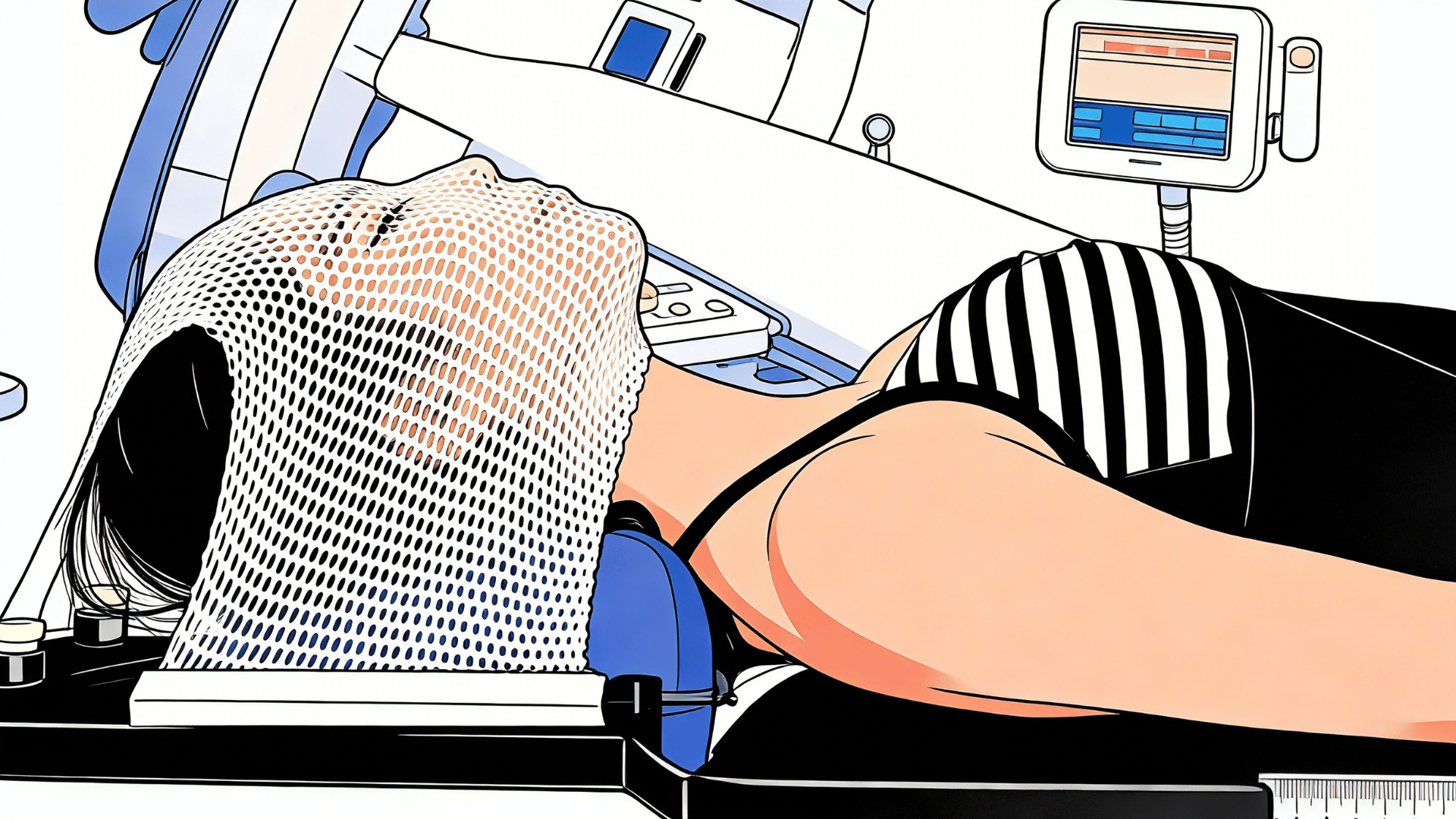
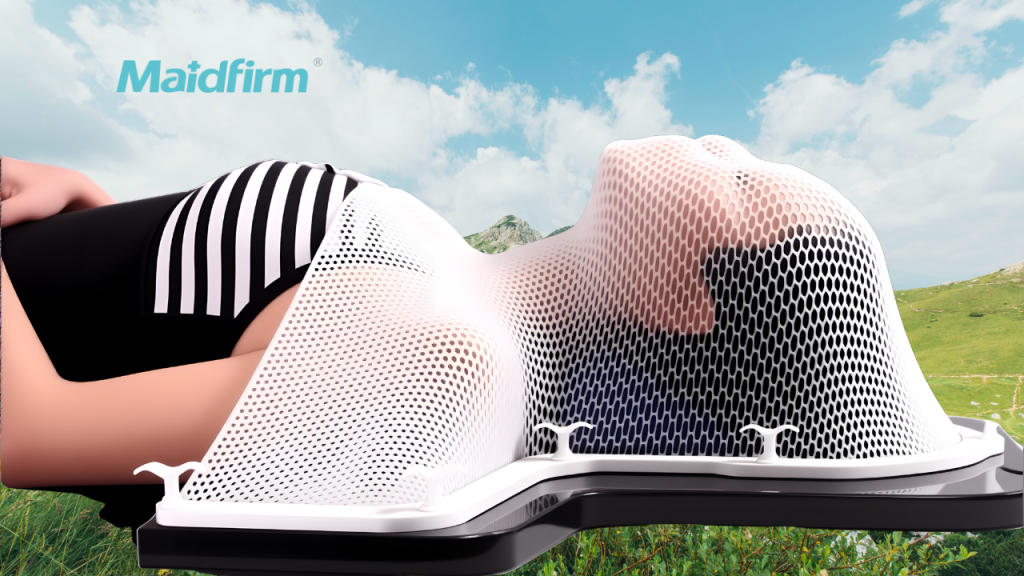
- Stereotactic head frames or reinforced mask systems
- Rigid body frames for lung, spine, and abdominal SBRT
- Fixed indexing and locking mechanisms
Flexibility may improve comfort—but at the cost of precision.
Controlling Inter-Fraction and Intra-Fraction Motion
Inter-Fraction Stability
Between treatment fractions, rigid immobilization ensures that:
- Setup variability remains minimal
- Daily image guidance corrections are small and predictable
- Planned geometry remains valid across sessions
This consistency is essential for multi-fraction SBRT protocols.
Intra-Fraction Motion
During beam delivery, even sub-millimeter motion can compromise dose distribution. Rigid immobilization:
- Limits patient drift
- Reduces rotational errors
- Enhances the effectiveness of motion management strategies
In SRS, where treatment times may be extended and margins are minimal, this stability is critical.
Interaction with Image-Guided Radiotherapy (IGRT)
Advanced IGRT systems rely on accurate image registration. Rigid immobilization improves:
- Registration reliability
- Reduced need for large couch corrections
- Confidence in six-degree-of-freedom adjustments
When immobilization is unstable, image guidance corrects symptoms—not causes.
Impact on Dosimetric Accuracy
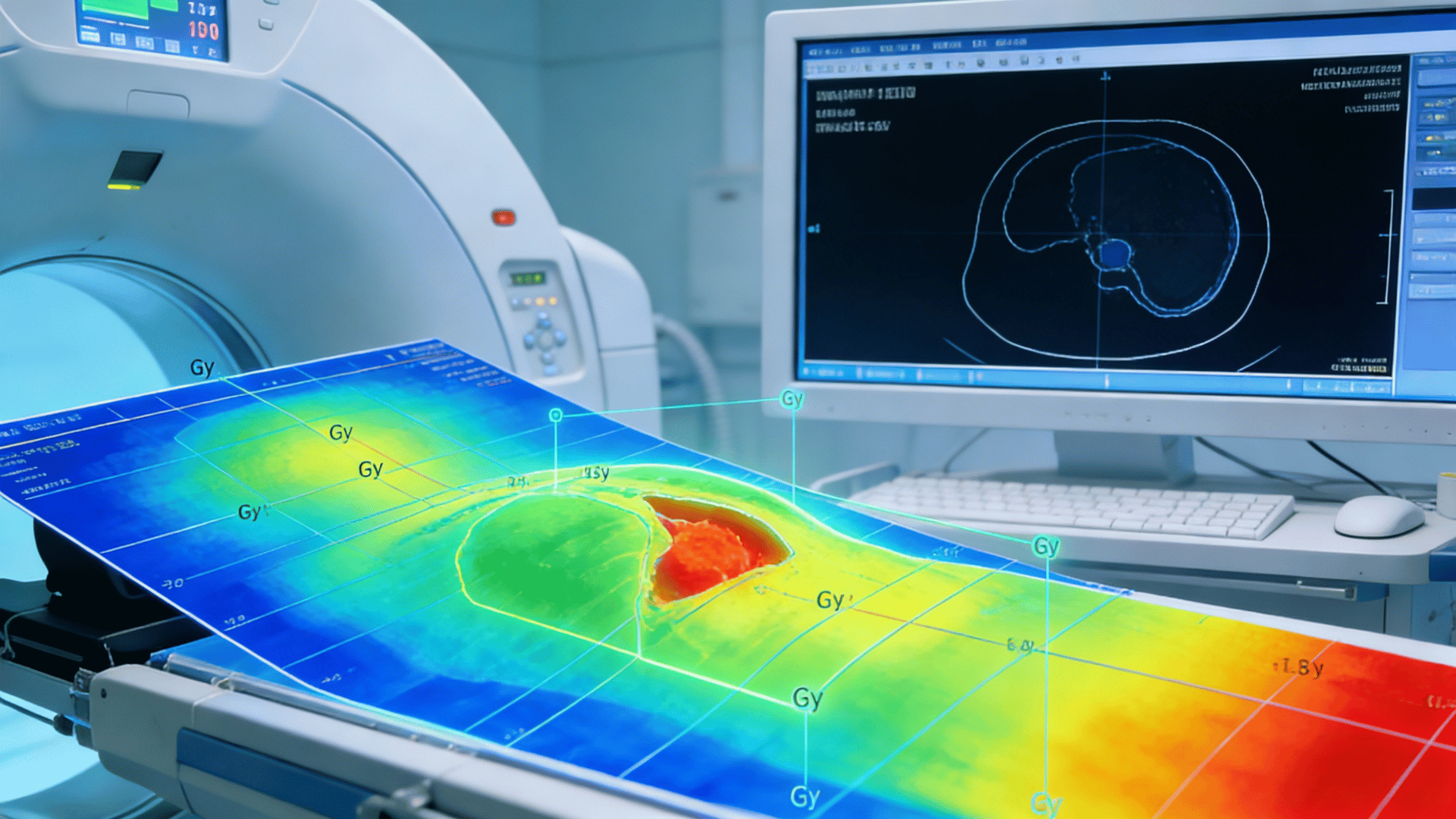
Geometric uncertainty directly affects dose delivery in stereotactic treatments. Rigid immobilization supports:
- Accurate dose placement within steep gradients
- Reliable conformity and gradient indices
- Protection of adjacent critical structures
In SBRT and SRS, geometry is dosimetry.
Comfort vs Precision: A False Dichotomy
A common misconception is that rigid immobilization must compromise patient comfort. In reality, modern systems achieve:
- Anatomically optimized rigidity
- Even pressure distribution
- Efficient setup to minimize on-table time
Well-designed rigid systems enhance both precision and patient tolerance.
Manufacturer Responsibility in Stereotactic Immobilization
For SBRT and SRS, immobilization systems must be engineered with stereotactic intent.
This includes:
- Mechanical testing under clinical loads
- Validation of long-term stability
- Tight manufacturing tolerances
- Integration with image guidance and couch indexing
Rigidity must be intentional, measurable, and reproducible.
Conclusion
Sub-millimeter accuracy in SBRT and SRS cannot be achieved through technology alone. It requires a stable geometric foundation that only rigid immobilization can provide.
In stereotactic radiotherapy, there is no margin for compromise. Rigid immobilization is not a preference, an upgrade, or an optional accessory—it is non-negotiable.
Precision begins where motion ends.